Most teams don’t struggle with ideas. They struggle with repeatability.
They send a few email marketing campaigns, see mixed results, and assume the channel is “hit or miss.” The truth is usually simpler: the process is inconsistent. The audience is too broad. The offer is unclear. Or nobody knows what “success” means until after the send.
This guide is built to fix that. It’s not a list of hacks. It’s a practical system you can reuse for weekly promos, lifecycle messages, or a newsletter.
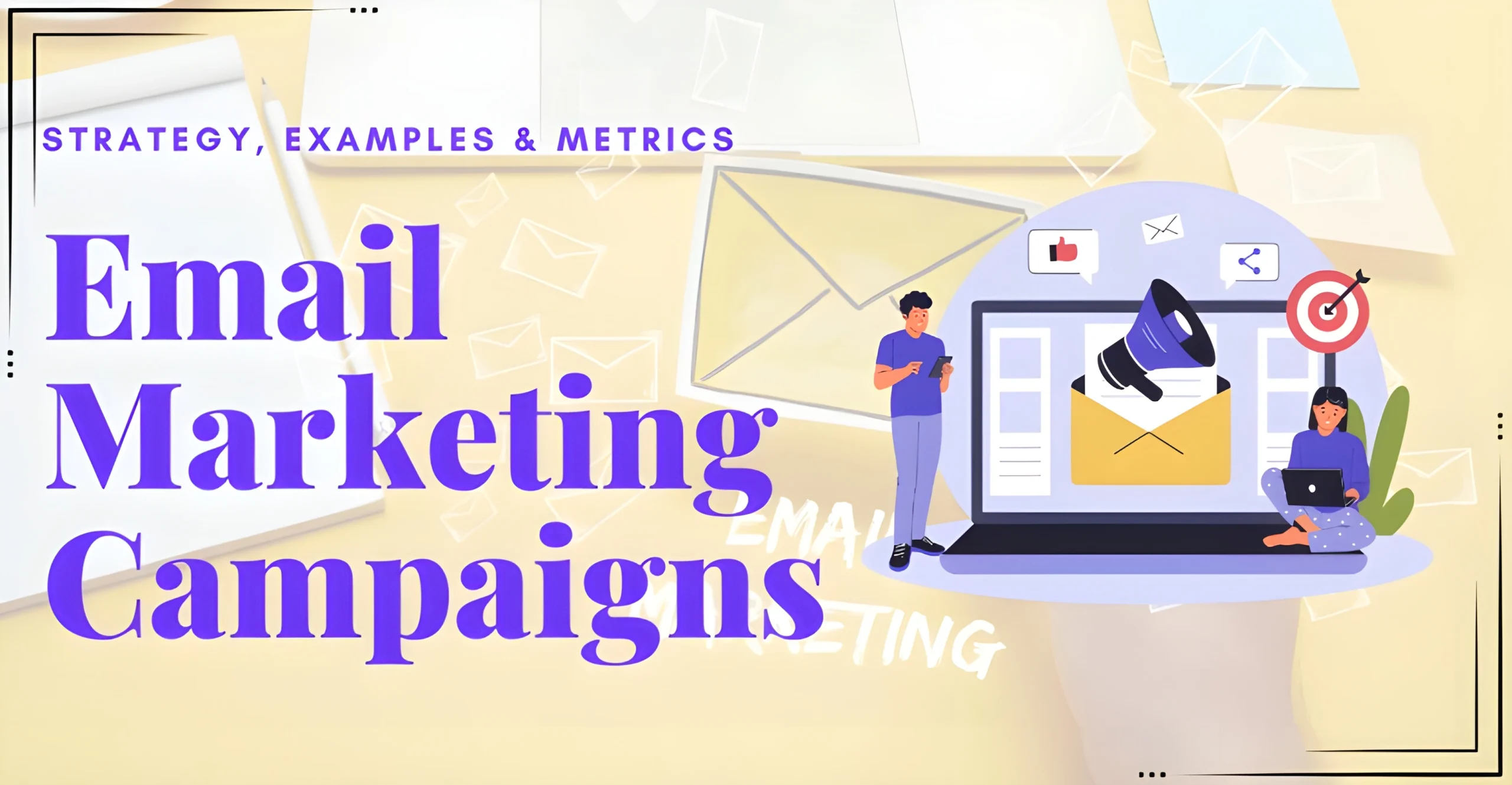
We’ll cover what qualifies as a campaign, why performance drops, how to build an email marketing campaign strategy, how segmentation and deliverability work in plain language, where automation fits, examples worth stealing, and the metrics that tell the truth.
And if you’re aligning email with broader growth work (including search), you’ll also see where internal “next steps” like AI SEO strategy can fit into the same planning mindset.
What Counts As An Email Marketing Campaign (And What Doesn’t)
A campaign is a planned set of emails with a specific goal, a defined audience, and a measurable outcome.
That sounds obvious. But it’s where many teams quietly go off track. They label everything a campaign, then wonder why reporting feels meaningless.
Here’s the practical breakdown:
- Campaign (one-off or short run): A timed initiative. Example: product launch, seasonal sale, event push.
- Automation (ongoing): A system triggered by behavior or time. Example: welcome series, onboarding, winback.
- Newsletter (recurring content): A consistent send that builds habit and trust, often with multiple CTAs.
If you want a quick “campaign test,” use this:
- Goal: What action should happen?
- Audience: Who is this for, and who is it not for?
- CTA: What’s the next step?
- Measurement: What metric will prove it worked?
If you can’t answer those in one minute, you don’t yet have a campaign. You have an email.
Also, campaign types matter because they change how you write, design, and measure. Common types you’ll see across email marketing campaign examples include:
- Promotion (short-term revenue)
- Launch (awareness + conversion)
- Nurture (education + progression)
- Reactivation (win back attention)
- Event/content push (registrations, downloads, sessions)
One more nuance: targeting scope changes the offer. The same audience tension exists in SEO, think local SEO vs national SEO. When you narrow the scope, you can be more specific. Specific usually converts.
Why Most Email Marketing Campaigns Underperform (And What Fixes It)
If you’ve run email for any length of time, you’ve probably seen the pattern:
- One send does great.
- The next looks “fine.”
- Then, the performance slides, and nobody knows why.
Underperformance usually comes from a small set of causes:
1) The goal is fuzzy
When a campaign tries to drive awareness, clicks, and purchases all at once, it tends to do none of them well.
Fix: pick one primary outcome. Treat everything else as supporting.
2) The audience is too broad
Many lists are a mix of customers, leads, window shoppers, and dormant subscribers. Sending one message to everyone is convenient, but it’s rarely relevant.
Fix: segment at least once. Even a simple split (new vs active vs lapsed) is a real upgrade.
3) The offer is unclear
You can write excellent copy and still lose if the offer doesn’t match intent.
Fix: write the offer in one line. If it sounds vague, it probably is.
4) You don’t have a measurement loop
Teams check open rates, shrug, and move on. That’s not learning. That’s monitoring.
Fix: decide what you’ll change if performance is high, average, or low.
If you want a quick preflight list, keep it tight:
- Who is this for?
- Why now?
- What is the one action?
- What is the fallback if they don’t click?
- What will you do differently next time?
That’s the foundation of an effective email marketing strategy. It also aligns with how seasoned teams think about email marketing tips: not as tricks, but as repeatable decisions.
A Simple Campaign Strategy You Can Reuse Every Time
A reusable email marketing campaign strategy is not complicated. It’s disciplined.
Here’s a framework you can run for almost any campaign:
1) Goal
Choose one:
- Generate revenue
- Activate a feature
- Drive signups
- Move leads forward
- Re-engage dormant subscribers
If you don’t choose, your message will try to do too much.
2) Audience
Define the segment using what you know:
- Lifecycle stage (new, active, lapsed)
- Behavior (clicked last 30 days, viewed pricing, attended webinar)
- Attribute (industry, plan type, category preference)
This is where developing an email marketing strategy starts to feel real, because it forces a trade-off: you’re choosing relevance over reach.
3) Offer
Write the offer as a single sentence, like:
- “Get 20% off before Friday.”
- “See how to reduce onboarding time by 30%.”
- “Reserve your seat for the workshop.”
If the offer needs three sentences, it’s probably not an offer yet.
4) Message
Draft around one idea. One idea per email is the fastest way to improve clarity.
A simple pattern that works across many industries:
- Problem (what’s frustrating)
- Proof (why you’re credible)
- Offer (what you’re proposing)
- CTA (what to do next)
5) Timing
Timing is partly calendar, partly attention.
Ask:
- Is there a natural deadline?
- Is this tied to a behavior trigger?
- Are we sending too often to this segment?
6) Measurement
Pick the metric that matches the goal:
- Revenue per recipient (promo)
- Activation rate (product)
- Registration rate (events)
- Reply rate (high-touch B2B)
This framework is flexible enough for broad teams and specific enough to prevent drift. It also scales across contexts, including email marketing strategy for e-commerce and email marketing strategy for b2b.
If you need to operationalize this faster, this is one place internal tooling can help. For teams juggling many moving parts, the same “assistive tools” mindset applies across the growth function. See AI tools for local SEO as an example of how teams reduce manual overhead without losing strategic control.
Campaign Planning That Doesn’t Break: Timing, Cadence, And Content Choices
Good campaigns are rarely “one email.” They’re usually a small sequence of decisions that fit together.
Start with cadence:
- If you send rarely, one campaign can feel like a major event.
- If you send frequently, every email competes with the last one.
There’s no universal right answer. But there is a practical rule: don’t let frequency substitute for relevance.
A simple cadence approach:
- One primary send to the target segment
- One reminder to non-clickers (optional)
- One follow-up based on behavior (clicked vs didn’t click)
That’s enough for many teams.
If you want a lightweight control mechanism, write an email marketing campaign checklist that’s small enough to actually use:
- The goal is one sentence
- Segment is defined (not “everyone”)
- Offer is clear
- CTA is one action
- Measurement is chosen
- Fallback exists (what happens if they don’t click?)
You can expand it into a broader email marketing checklist later, but start lean. Most “checklists” fail because they become documents, not tools.
For teams that need deeper QA (especially in regulated or high-volume environments), that’s where more formal lists like an email marketing audit checklist or an email marketing qa checklist can make sense. Just don’t confuse compliance with effectiveness.
Yes, people search for checklist email marketing approaches for a reason. They’re trying to remove uncertainty. The goal is to remove the right uncertainty, not all of it.
Audience And Targeting: Segmentation + Personalization Without Overcomplicating It
If you improve only one thing in your email program, improve email segmentation.
Segmentation is the difference between “broadcast” and “conversation.” It’s also how you protect deliverability, because irrelevant emails create disengagement, and disengagement hurts inbox placement over time.
A practical way to think about email marketing segmentation is in three layers:
Layer 1: Who they are
- Industry, role, location
- Product category interest
- Plan type or customer tier
Layer 2: What they did
- Clicked an email in the last 30 days
- Visited pricing, demo, or checkout
- Downloaded a resource
- Abandoned a cart
Layer 3: Where they are in the lifecycle
- New subscriber
- New customer
- Active customer
- At-risk customer
- Dormant subscriber
You don’t need dozens of segments. You need a few that change the message.
A good starting point is a simple email marketing segmentation strategy:
- Segment A: New subscribers (first 14–30 days)
- Segment B: Active engagers (clicked/visited recently)
- Segment C: Dormant (no engagement 60–90 days)
Now, personalization.
Most teams think personalization is a first-name token. Real personalization is matching the message to the moment.
Examples of personalization strategies in email marketing that actually change outcomes:
- Offer personalization: Discount vs educational resource based on lifecycle stage
- Content module personalization: Different sections inside the same email based on category interest
- Timing personalization: Send-time optimization by segment, not by list
If you publish across channels, you can also coordinate email with topical intent. That coordination logic is similar to how local targeting works in search. For a deeper internal read, see local SEO tips, not because SEO “is email,” but because both disciplines reward specificity.
One more overlooked piece: write content that matches segment needs. That’s where phrases like email content for different customer segments stop sounding academic and start sounding like money.
And if you want a sanity check, these email segmentation best practices hold up in almost every program:
- Segments should be easy to explain in one sentence
- Segment definitions should be stable (so reporting is meaningful)
- Every segment should get a slightly different “why this matters.”
- If you can’t write a different CTA, you probably don’t have a different segment
Deliverability: Reach The Inbox Before You Try To Win The Click
If your emails don’t land in the inbox, everything else becomes performance theater.
Email deliverability is not mystical. It’s the result of three forces working together:
- Authentication (are you who you say you are?)
- Reputation (do people engage with your mail?)
- Content/behavior signals (do spam filters see risk?)
Most teams don’t need a deep technical audit to improve. They need a minimum viable routine:
Minimum viable routine
- Remove hard bounces quickly
- Suppress chronically unengaged subscribers
- Keep sending consistent (spikes look suspicious)
- Monitor complaints and unsubscribes per segment
If you’re actively troubleshooting, you may run an email deliverability test or periodically check email deliverability using your ESP’s tools and dashboards.
Also, don’t ignore environmental changes. There’s a reason people follow email deliverability news, mailbox providers adjust filters, and what worked last year may need tweaks this year.
When do you need help?
If you have persistent inboxing issues or you’re scaling volume quickly, an email deliverability consultant can be worth it. The right consultant doesn’t just “fix SPF.” They connect list quality, cadence, and content to outcomes.
There’s also an indirect lever that matters more than many realize: audience quality. If your acquisition channels pull low-intent subscribers, engagement drops, and deliverability suffers. That’s why local intent work can matter here too, see local SEO for small businesseslocal seo tips as an internal example of how tighter targeting often improves engagement signals across channels, including email.
Automation vs One-Off Campaigns: Where Each One Fits
Campaigns are events. Automation is infrastructure.
You can run strong email marketing campaigns without automation, but it’s harder to scale consistency without some form of email marketing automation.
Here’s the cleanest way to decide:
- Use campaigns when timing matters (launches, promotions, announcements)
- Use automation when behavior matters (onboarding, retention, winback)
If you’re building your baseline, these are the automations most teams should have:
- Welcome series (set expectations, deliver value early)
- Onboarding or post-purchase (reduce confusion, drive activation)
- Browse/cart abandonment (when relevant)
- Re-engagement (a last attempt before suppressing)
That’s enough to make email automation pay for itself in many cases.
Where tools come in: you don’t need a complex stack to do this. But once your volume grows, choosing the right email marketing automation tools becomes a workflow decision, not just a feature list.
If your program is local-first ecommerce, automation decisions may also connect to the operational reality of selling locally online, see local e-commerce for the internal context that often changes timing, offers, and fulfillment messaging.
And yes, teams sometimes search for email automation tools, email automation software, or email marketing campaign software when what they really need is clarity on goals and segments first. Tools amplify whatever strategy exists. They don’t create one.
Examples That Actually Help: What Strong Email Marketing Campaigns Look Like
Examples are useful when they explain why something works.
Below are patterns you can adapt. Consider them a practical library of email marketing examples and marketing email examples, not templates you blindly copy.
1) Promotion campaign (revenue)
- Subject angle: “One clear offer + real deadline.”
- CTA: Shop now / claim offer
- Why it works: urgency without confusion
This is where you’ll see many “classic” email marketing campaign examples. The mistake is sending them to everyone. Segment them by purchase intent or category history.
2) Product launch campaign (activation + conversion)
- Subject angle: “What’s new + why it matters.”
- CTA: Try the feature / see the update
- Why it works: benefits first, details second
3) Content/newsletter campaign (habit + trust)
- Subject angle: “One strong insight, not ten links.”
- CTA: Readreplyy / share
- Why it works: consistency builds recognition.
If you publish newsletters, lean on newsletter best practices and email newsletter best practices that prioritize scannability: short sections, clear headers, and one primary CTA.
And yes, headline craft matters too. This is a natural place to link internally to newsletter headline writing best practices or even LinkedIn newsletter best practices if your audience overlaps.
4) Event/webinar campaign (registrations)
- Subject angle: “Outcome-focused promise”.
- CTA: Save your seat
- Why it works: clear value exchange
5) Winback campaign (re-engagement)
- Subject angle: “We’ll stop emailing unless you opt in.”
- CTA: Keep me subscribed / update preferences
- Why it works: creates a decision, reduces passive disengagement.
6) Referral/advocacy campaign (growth)
- Subject angle: “Give, get, share.”
- CTA: Refer a friend
- Why it works: leverages social proof and reciprocity
If your distribution mix includes local community channels, your email can coordinate with offline and creator-driven promotion. That’s a natural internal bridge to local influencers for online store promotion.
If you want to tie this back to strategy, call out the “steal this structure” patterns:
- Problem → Proof → Offer → CTA
- Curiosity → Value → Proof → CTA
- Short story → Insight → One ask
These patterns show up repeatedly in the best email marketing examples because they keep attention focused.
If you’re documenting your own library, you can even label what you’re collecting as email marketing strategy examples, not just “cool emails,” but examples tied to goal + segment + offer.
Metrics That Matter: How To Measure Campaign Performance
Metrics don’t just tell you what happened. They tell you what to fix.
Start with a tiered view of email marketing metrics:
Tier 1: Delivery health
- Bounce rate
- Complaint rate
- Inbox placement signals (if available)
Tier 2: Engagement
- Click rate
- Click-to-open (useful when you trust deliverability)
- Reply rate (for high-touch sends)
Tier 3: Outcomes
- Conversions
- Revenue per recipient
- Assisted conversions (when applicable)
This is the difference between vanity and utility. You can report email marketing engagement metrics all day, but if they don’t tie to the goal, you’re just watching numbers move.
For campaign review, build a simple cadence:
- 24 hours: delivery health + initial engagement
- 72 hours: conversion trend + segment differences
- 7 days: final outcomes + what to change next time
If you want a practical benchmark check, treat “benchmarks” as directional, not definitive. Your list, offer, and audience are specific. Still, teams sometimes track email marketing metrics benchmark numbers to catch sudden drops, not to chase someone else’s averages.
For deeper measurement foundations, link internally to digital analytics. If your team uses Google Analytics, you can also connect email outcomes to site behavior with Google Analytics data collection and interpret what you’re seeing via GA4 dimensions and metrics.
One warning: attribution complexity can become a distraction. The goal is not perfect tracking. The goal is better decisions.
If you’re aligning performance reporting with campaign intent, you’re already using email marketing performance metrics correctly.
And if you need a plain-language label for all of this, use metrics for email marketing as your mental bucket: the few numbers that help you act, not just report.
Related: Local Growth Plays That Pair Well With Email
Email doesn’t exist in a vacuum. If your business depends on local intent, the way people discover you changes how you should message them.
For example, acquisition from local SEO for small businesses often produces subscribers with clearer intent than broad “top of funnel” traffic. That can improve engagement, reduce complaints, and make segmentation easier.
It’s also worth understanding local SEO vs national SEO, because the difference mirrors an email truth: narrower audience targeting tends to allow more specific offers and clearer CTAs.
If you want practical starting points, see local SEO tips as a companion read. The point isn’t to turn this email guide into an SEO guide. The point is to align targeting logic across channels.
Conclusion
Strong email marketing campaigns are not magic. They’re the output of a repeatable system.
If you take only one idea from this guide, take this: campaigns improve when you make fewer, clearer decisions, goal, segment, offer, message, timing, measurement, and then learn from results.
Start small. Pick one campaign type. Write a one-page brief. Send to a defined segment. Review results after 72 hours. Then change one variable next time.
That’s the quiet engine behind consistent performance.
And if you want a practical next step, write down three email marketing tips you’ll actually apply this month, then build your next send around them.
Frequently Asked Questions
1) How to check competitors’ email marketing campaigns?
2) How to create an email marketing campaign?
3) What is the most effective email marketing campaign strategy?
4) How to create a seasonal email marketing campaign calendar?
5) How much do email marketing campaigns cost?