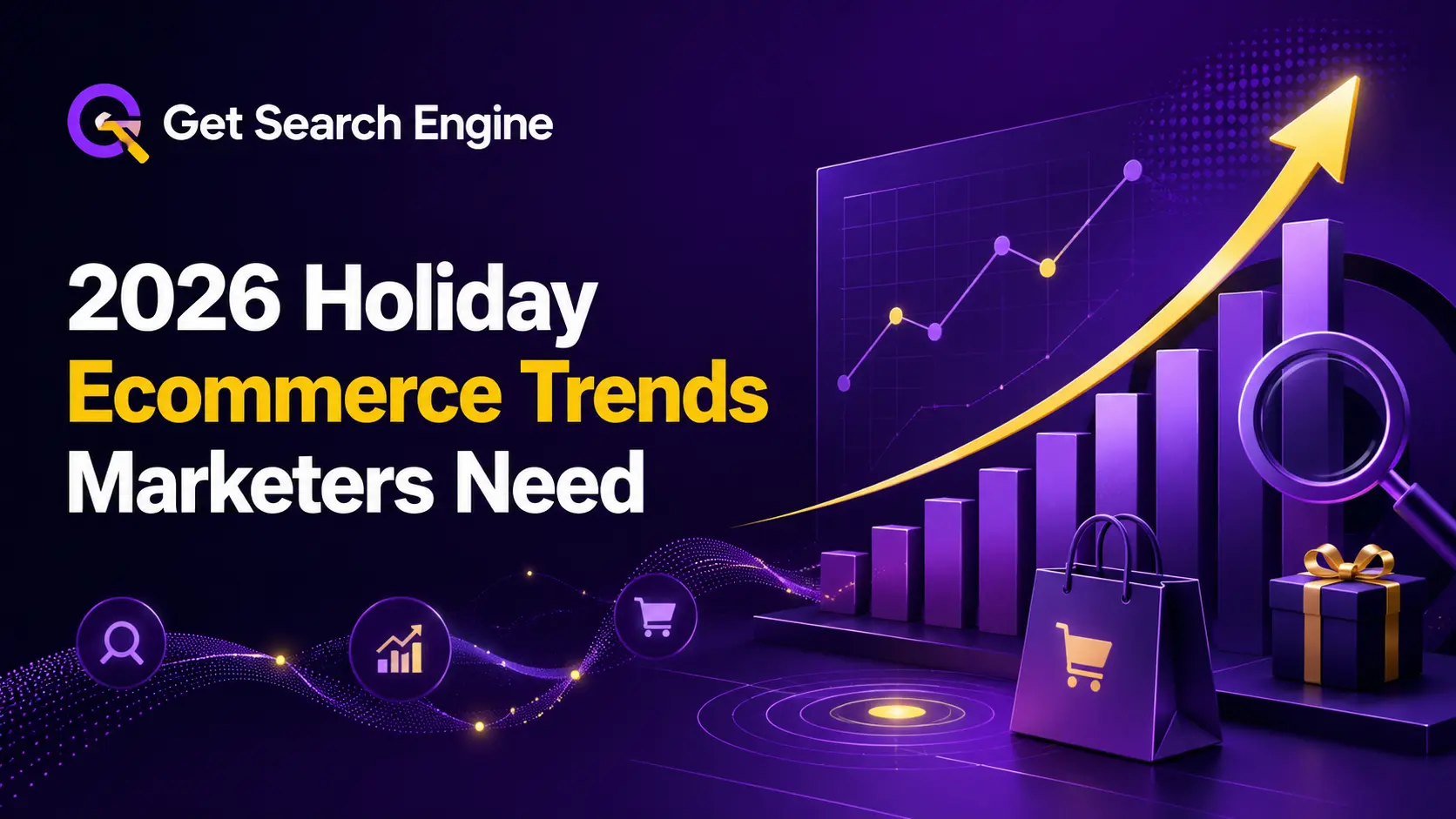
New 2026 holiday ecommerce trends published by Practical Ecommerce point toward another year of online growth, with artificial intelligence, flexible payments and international shopping becoming more important parts of the customer journey. The publication forecasts roughly 8% U.S. online holiday sales growth.
2026 holiday ecommerce trends
What did the forecast predict?
Practical Ecommerce published five predictions for the 2026 holiday shopping season on August 16.
The forecasts are:
- U.S. holiday ecommerce will grow around 8%.
- AI-referred visitors will convert at least 25% better than non-AI traffic.
- U.S. holiday BNPL purchases will exceed $22 billion.
- Cross-border orders will represent about 20% of global Black Friday–Cyber Monday ecommerce.
- Amazon third-party sellers will account for 60% or less of units sold during Q4.
These are editorial predictions.
They are not official Adobe, NRF or government forecasts.
However, they are built from current ecommerce datasets and provide a useful framework for holiday planning.
Could online holiday sales grow 8%?
Practical Ecommerce predicts U.S. online sales between November 1 and December 31 will increase about 8% year over year.
The prediction uses recent ecommerce momentum as supporting evidence.
Adobe reported U.S. shoppers spent $257.8 billion online during the 2025 holiday season, up 6.8%.
Online spending during the June 2026 Prime Day period grew 9.3%, according to the same analysis.
The National Retail Federation had not yet published its official 2026 holiday forecast when the August 16 article appeared.
So marketers should treat 8% as a planning scenario rather than a settled market forecast.
Still, the direction is useful.
Holiday ecommerce demand is expected to remain healthy.
Why could AI traffic convert better?
This may be the most interesting prediction for digital marketers.
The article expects shoppers referred by generative AI tools to convert at least 25% better than visitors from non-AI channels during peak season.
Historical data provides some support.
During the 2025 holiday season, Adobe reported higher conversion among AI-referred shoppers, with the difference becoming particularly strong on Thanksgiving and Black Friday.
The pattern also continued into major 2026 shopping events, according to Practical Ecommerce’s analysis.
Why might this happen?
AI shoppers often perform research before clicking.
They may ask:
What is the best coffee machine under $300 for someone who drinks mostly cappuccino and wants easy cleaning?
The AI helps narrow the choices.
The customer reaches the retailer with:
- Clearer requirements
- Fewer options
- Greater product understanding
That can create stronger purchase intent.
Does this mean AI will replace Google?
No.
The article itself emphasizes that AI referral volumes remain small compared with the wider ecommerce market.
A channel can convert very well and still contribute relatively little total revenue.
Marketers should therefore evaluate both:
- Traffic volume
- Conversion quality
An AI channel sending 5,000 visits at a 6% conversion rate can be commercially useful without replacing a search channel sending 500,000 visits.
The sensible strategy is not to move SEO budget entirely into AI optimization.
It is to make product information strong enough to work across both discovery systems.
Why could BNPL exceed $22 billion?
Practical Ecommerce predicts buy-now, pay-later services will finance more than $22 billion in U.S. online holiday purchases.
Holiday spending creates a natural use case for instalments.
Customers may need to purchase several gifts within a short period.
BNPL allows them to divide those costs across multiple payments.
Retailers should therefore review:
- BNPL availability
- Checkout messaging
- Fees
- Refund handling
- Customer disclosure
The goal should not be to push customers into unnecessary debt.
The payment option should be clearly explained and easy to understand.
How important is cross-border commerce?
The August 16 forecast predicts international purchases could represent roughly one-fifth of worldwide Black Friday–Cyber Monday ecommerce spending.
DHL’s 2026 ecommerce research gives this prediction useful context.
DHL reports that 70% of global online shoppers buy from sellers outside their home country, up from 60% in 2025.
It also found that 45% buy internationally more than once per month.
Price remains an important reason.
But international conversion also depends on:
- Delivery cost
- Shipping time
- Currency
- Returns
- Trust
- Customs
DHL reports that 57% of global shoppers say free delivery would encourage more cross-border purchasing.
What should ecommerce teams prepare?
Start holiday content early
Do not wait until Black Friday.
Publish:
- Gift guides
- Product comparisons
- Best-for pages
- Buying guides
- FAQs
before peak demand.
Improve AI-readable product data
Make important product details easy to identify.
Include:
- Price
- Availability
- Variants
- Materials
- Compatibility
- Shipping
- Returns
Track AI referrals
Build a dedicated reporting view for traffic from major AI platforms.
Compare:
- Conversion rate
- Revenue
- Average order value
- New customer share
Review payment options
If BNPL is relevant, check how clearly it appears during product discovery and checkout.
Prepare international pages
Cross-border visitors need clear information about:
- Currency
- Delivery
- Customs
- Returns
- Local payment methods
Translation alone is not enough.
What about Amazon sellers?
Practical Ecommerce’s fifth prediction expects third-party sellers to account for 60% or less of Amazon units sold in Q4.
Third-party sellers represented 62% of units in Q4 2024 and 61% in Q4 2025, according to the article’s review of Amazon figures.
This prediction is more uncertain than some of the wider ecommerce trends.
Marketplace share can change quickly based on:
- Amazon inventory
- Pricing
- fulfilment
- promotions
- seller competition
Brands should therefore avoid making large channel decisions from this prediction alone.
What are the limits of the forecast?
Every number in the August 16 article is a prediction.
Marketers should not write:
U.S. ecommerce will grow exactly 8%.
A better statement is:
Practical Ecommerce forecasts approximately 8% growth.
Likewise, AI-referred visitors are not guaranteed to convert 25% better for every retailer.
Performance will differ by:
- Category
- Product complexity
- Customer demographics
- Website quality
A technical electronics retailer may see very different AI-shopping behaviour from a fast-fashion store.
What happens next?
The smartest approach is scenario planning.
Create three holiday forecasts:
- Conservative
- Expected
- Strong
Then decide what happens to:
- Media budgets
- Inventory
- Promotions
- fulfilment
- staffing
under each scenario.
Also create a separate AI-shopping report.
Holiday 2026 could be the first peak season where conversational product discovery becomes large enough to deserve its own reporting line for many retailers.
But traditional ecommerce fundamentals remain the priority.
Consumers still need:
- Competitive products
- Trust
- Fast delivery
- Good prices
- Smooth checkout
AI may increasingly influence what enters the shortlist.
The retailer still has to close the sale.